Bedding Guide
Wool Comforters Explained: Loft, Weight, and Year-Round Use
A wool comforter’s warmth is not a simple matter of heft. The amount of fill, the way it is contained, the room it lives in, and the layers already on the bed all help determine whether it feels airy, substantial, or too warm. Understanding those details makes it easier to choose a comforter for the seasons—and to keep it in good condition.
There is a particular kind of satisfaction in getting into bed when the room has cooled: the sheet is crisp, the duvet falls into place, and the weight above you seems to settle the day. A comforter has to perform this small domestic miracle without making the sleeper too hot, too cold, or conscious of the bedding at all. Wool is one option for that job, valued for its insulating qualities and its capacity to take up and release moisture. But “wool comforter” does not describe one universal experience. Fill weight, loft, quilting, shell fabric, and the surrounding bedroom all change the result.
That variability is useful. A person in a cool, drafty room may want a fuller comforter than someone sleeping in a well-heated apartment. A warm sleeper may prefer a lighter fill and a cotton sheet, while someone who likes a tucked-in, cocooning bed may welcome a denser layer. Rather than searching for a single ideal weight, it is more helpful to understand what the numbers and construction details can—and cannot—tell you.
This guide explains how wool comforters work, how to compare loft and weight, what year-round use means in practice, and how to care for wool fill over time. The goal is not to make bedding sound like a technical examination. It is to help you choose a layer that suits your room, habits, and tolerance for warmth.
What is a wool comforter?
A wool comforter is a stitched bed covering filled with wool fibers, generally enclosed in a fabric shell. The shell may be cotton or another textile; the fill is arranged inside the cover and secured by quilting, channels, or another construction method. As with other comforters, the shell and the stitching matter as much as the fiber itself. They affect how the fill stays in place, how the comforter drapes, and how air moves through the layers.
Wool insulates by holding air among its fibers. Those small pockets of air slow the transfer of heat, helping a bed feel warm without requiring a heavy, tightly packed layer. Wool also absorbs moisture vapor, which can contribute to a less clammy feeling for some sleepers. This property is often described as moisture management. It does not mean wool will keep every person at an ideal temperature, nor does it replace a cool room, breathable sleepwear, or suitable sheets. It is one part of the bed’s overall environment.
There is no single wool-comforter standard that guarantees a particular warmth. Products differ by fill amount, fiber quality, loft, shell, and manufacturing. One comforter may feel lofty and light; another may feel flatter and more substantial. Product descriptions can help, but a specification is most useful when you know what it measures and can compare it with the same information from another option.
Loft: the visible lift of the fill
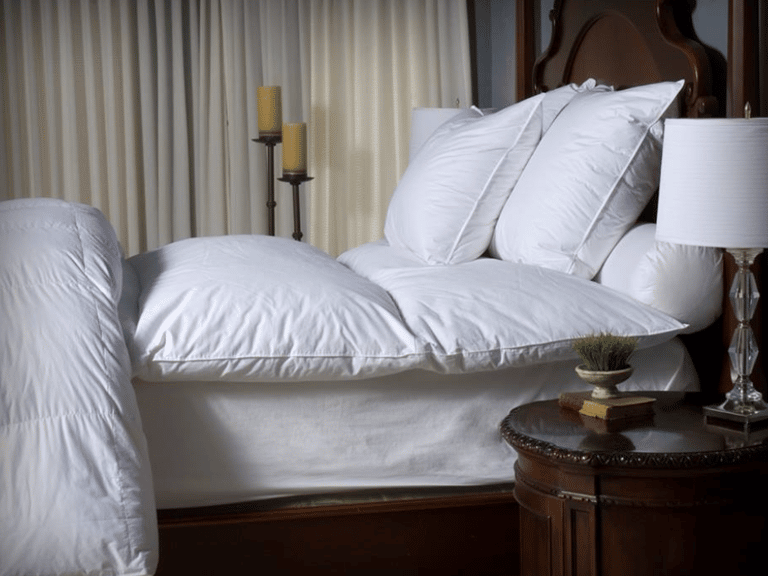
Loft describes how much space a fill occupies and, in everyday terms, how puffed or raised the comforter appears. A loftier comforter may feel enveloping, while a lower-profile one can feel flatter and closer to the body. Yet loft is not a dependable warmth rating on its own. A lofty product can be light and airy; a denser one may contain more fill in a smaller space. Fiber characteristics and construction influence how much air the comforter holds and how that warmth feels.
Consider the difference between a bed that looks dramatically piled and one with a quieter, flatter drape. The first may appeal to someone who enjoys an abundant, cloudlike surface. The second can suit a sleeper who finds bulky bedding restrictive or who needs room for several layers. Neither appearance proves that one comforter will be warmer in every situation. A useful comparison considers loft alongside fill weight, dimensions, and the manufacturer’s care and use guidance.
Quilting also shapes the experience. Stitching can divide the comforter into smaller sections, limiting how far fill can migrate and helping distribute it across the bed. Channel or box constructions may organize fill differently. If seams are widely spaced, the fill may have more room to shift; if the pattern is tighter, the comforter may lie more evenly but feel less lofty in some places. The important question is whether the construction supports an even layer over time, not whether one particular quilting pattern is inherently best.
When evaluating loft, ask practical questions. Does the comforter appear evenly filled? Are the edges finished securely? Is the stitching likely to keep the insulation distributed? Will the comforter fit inside your preferred duvet cover without bunching? These details matter on a real bed, where a fill’s performance depends on its ability to stay where it belongs.
Fill weight and warmth: what the number means
Fill weight is the amount of filling used in a comforter, typically stated as a total weight or as a weight per area. Those measures are not interchangeable. A total weight can be difficult to compare unless the comforters are the same size; a per-area figure offers a more direct comparison, but still does not describe the whole feel. Size, shell, quilting, and the characteristics of the wool all contribute to the finished product.
In general, more fill can provide greater insulation, but the relationship is not an exact formula. A higher number does not automatically mean “best for winter,” just as a lower number does not necessarily mean “only for summer.” A compactly constructed comforter and a lofty one may distribute the same amount of fill differently. The shell can also affect breathability and drape. Use fill weight as one clue, then look for clear descriptions of intended warmth and construction.
Be alert to vague language. Terms such as “all-season,” “lightweight,” and “extra warm” can be useful shorthand, but they are not universal measurements. One maker’s all-season comforter may be suited to a heated home; another’s may be designed for a colder room. If precise specifications are unavailable, ask for the fill weight, the comforter’s dimensions, the shell fiber, and any guidance about typical room conditions. If comparing two options, make sure the figures refer to the same units and the same size.
Weight is also a tactile preference. Some people like a layer they can feel resting across the body; others sleep more comfortably under bedding that seems almost weightless. The warmth question and the sensation question overlap, but they are not identical. A comforter can insulate well without feeling heavy, while a substantial cover may feel reassuring even when the bedroom is not particularly cold. Neither preference is more correct. A useful choice accounts for both the room and the sleeper.
Choosing a comforter for your bedroom
The room is often the overlooked part of the purchase. A cold bedroom with older windows, a room above an unheated garage, and a consistently warm apartment can require very different bedding. Central heating, ventilation, window exposure, and the number of people sharing a bed all influence perceived warmth. Before choosing a fill, notice the conditions you actually sleep in rather than relying only on the season outside.
For a bedroom that stays cool, a warmer wool comforter may be a sensible foundation, especially if you prefer a single main layer. If the room is warm or you often wake up hot, a lighter option may be easier to adjust. You can also build warmth with layers: a breathable sheet, a lighter comforter, and an additional cover that can be removed. Layering gives you more control than committing to one very warm covering for the whole year.
Think about your sleep routine, too. If you change bedding frequently, consider whether the comforter’s dimensions and weight are manageable for you. If you like to make the bed neatly, look for a construction and shell that drape in the way you prefer. A comforter that is too small for the duvet cover may bunch; one that is much larger may feel uneven or shift around. Check the measurements of both pieces, not merely the label on the bedding.
People who share a bed may have different temperature preferences. In that case, a medium-weight comforter paired with separate blankets or removable layers can be more flexible than selecting a very warm option for both sleepers. The same logic applies to guest rooms: adaptable layers are often more useful than bedding chosen for one person’s habits alone.
- For a cool room: consider a warmer fill, a well-fitting duvet cover, and a sheet layer that does not feel cold against the skin.
- For a warm room: look for a lighter comforter and keep an extra blanket nearby rather than relying on a heavy layer every night.
- For changing temperatures: use layers that can be added or removed without remaking the entire bed.
- For shared beds: account for both sleepers’ preferences and consider separate blankets if temperature needs differ sharply.
- For an adjustable bed: check that the comforter’s dimensions and drape work with the mattress and its movement.
Can wool be used year-round?
Often, yes—but “year-round” does not mean that one comforter will feel equally appropriate in every home and every month. Wool’s insulating behavior and moisture absorption can make it useful across changing conditions, but the comforter’s weight still matters. A heavy fill can be too warm during a hot spell, while a light fill may not be enough during a cold winter night. The phrase is best understood as a description of versatility, not a guarantee of universal comfort.
Climate and heating habits make the difference. In a region with mild seasonal changes, a medium-weight comforter may stay on the bed for much of the year. In a home with hot summers and cold winters, a lighter comforter combined with a separate blanket may be easier to adapt. A person who sleeps warm may also choose a lighter wool layer and rely on pajamas or a coverlet when temperatures fall. The right arrangement depends on the room, not just the calendar.
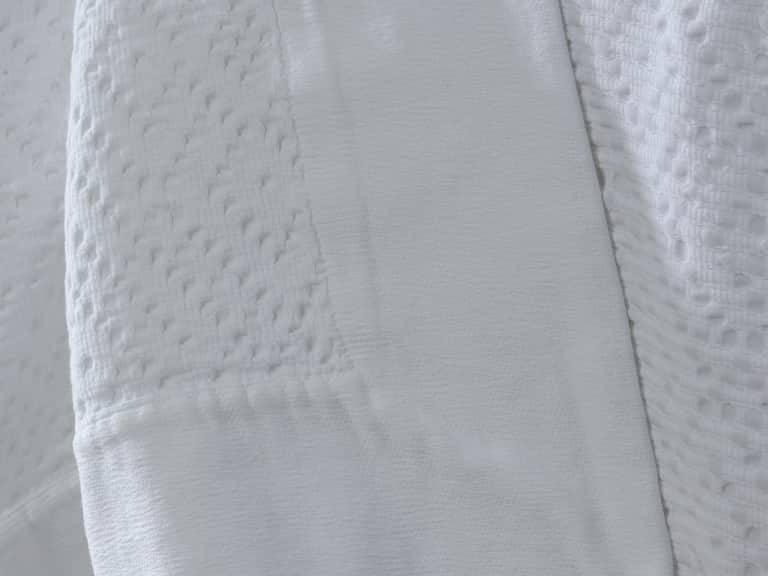
Seasonal bedding changes need not be elaborate. Keep the same sheet set and swap the top layer, or fold an additional blanket at the foot of the bed. If the comforter is warm enough for most nights but occasionally too much, a lighter sheet or an open window may not be the only solution; changing the top layer can be simpler and more comfortable. For warm-weather bedding, a lightweight cotton bedcover can serve as a separate layer when a full comforter feels excessive. The [Tex Bedcover](/products/tex-bedcover-5368), made from cotton in a three-dimensional waffle weave, is described as lightweight and suited to summer use.
People sometimes expect wool to solve night sweats or temperature discomfort by itself. Bedding can support comfort, but it cannot diagnose or treat a medical condition. Persistent overheating, night sweats, or repeated sleep disruption may have causes beyond the comforter. In those circumstances, changing bedding can be a practical experiment, but it should not stand in for medical advice when symptoms are concerning or ongoing.
The importance of the shell and duvet cover
The comforter’s outer fabric has a quiet but important role. A tightly woven shell can help contain the fill; its hand and weight influence how the comforter feels against the body and how it moves inside a cover. Cotton is common, but the label should identify the actual shell material. If breathability, skin sensitivity, or laundering is a priority, examine the shell and finish rather than assuming that a wool fill determines the entire product’s character.
A duvet cover adds another layer between the sleeper and the comforter. Its weave and fiber can change the feel of the bed: a crisp cotton percale may feel different from a smooth sateen or a textured linen. A cover also helps protect the comforter from ordinary soil and reduces the need to clean the filled article itself. For a secure fit, look for corner ties or another fastening system that keeps the insert from gathering at one end. Compare cover and insert dimensions before buying, since nominal size labels can vary.
Good fit is not cosmetic alone. If the insert is too small, the cover may appear empty at the corners; if it is oversized, the bedding can bunch and place uneven pressure on the seams. A correctly sized cover helps the comforter lie evenly, making its insulation feel more consistent across the bed. It also makes daily use less fussy—a modest benefit, but one that tends to be appreciated at the end of a long day.
Caring for wool fill over time
Wool can be durable, but care instructions vary by product. The first rule is the least glamorous and the most important: read the maker’s label. Some wool comforters are intended for professional cleaning; others may have specific spot-cleaning instructions. Do not assume that a comforter is machine washable because its duvet cover is. Water, heat, agitation, or unsuitable detergent can alter the fill or shell, and the care method for one item may not be appropriate for another.
Using a duvet cover is a simple way to limit how often the comforter itself needs attention. Wash the cover according to its instructions, and address spills on the comforter promptly using the method recommended by the manufacturer. Avoid soaking or scrubbing an area unless the care guidance permits it. If a comforter becomes damp, allow it to dry thoroughly before storing or making the bed. Fresh air can help with routine airing, but direct, prolonged sun exposure may not suit every shell or finish.
Follow the manufacturer’s advice for storage. When a wool comforter is not in use, store it clean and completely dry in a breathable container or cotton storage bag where possible. Avoid compressing it tightly for long periods, since prolonged compression can affect loft. Keep it away from damp spaces, and do not put it away with moisture trapped inside. These precautions help protect the fibers and reduce the chance of unpleasant odors or damage during seasonal storage.
Routine handling matters more than dramatic interventions. Shake or gently redistribute the comforter as needed, especially if the construction allows areas to settle. Avoid pulling at seams or repeatedly yanking the comforter into place. If you notice a persistent clump, a broken stitch, or fill escaping, consult the maker or a qualified cleaner rather than attempting an aggressive repair. Careful maintenance is less about making a comforter pristine and more about letting it do its job without unnecessary wear.
A practical checklist before buying
Product descriptions often place the most emphasis on softness, luxury, and seasonality. Those words may help establish a general mood, but the more practical details are the ones that allow an informed comparison. Before choosing, gather the information that affects fit, warmth, and care.
- Fill composition: confirm that wool is the fill and check whether the product contains other fibers.
- Fill weight: find out whether the figure is a total weight or weight per area, and compare equivalent sizes.
- Dimensions: match the comforter to the bed and to the duvet cover you plan to use.
- Construction: look for an explanation of quilting, baffles, channels, or other methods used to keep fill distributed.
- Shell fabric: identify the outer material and consider its feel, breathability, and care requirements.
- Care instructions: determine whether routine cleaning is possible at home or requires specialist care.
- Return or trial terms: check the retailer’s policy, especially if warmth and feel cannot be assessed in person.
- Use conditions: consider bedroom temperature, existing layers, and whether you sleep warm or cool.
If the listing leaves essential information out, ask for it. A dependable description should make it possible to understand what is inside the comforter, how it is built, and how it should be maintained. The more specific the answers, the less you have to infer from a photograph or a marketing phrase.
Common misconceptions about wool comforters
“Heavier always means warmer.” More fill can increase insulation, but total weight alone does not capture loft, construction, shell, or size. A heavy comforter can feel dense without being the most comfortable choice for a particular room.
“A lofty comforter must be the warmest.” Loft suggests volume, not a complete warmth rating. Compare fill details and construction, and pay attention to the maker’s stated use.
“Year-round means suitable for every climate.” A versatile comforter can work across a range of seasons, but a hot bedroom and a cold bedroom are not the same environment. Removable layers are often the more flexible approach.
“Natural fiber means effortless care.” Natural materials still have specific care needs. Wool fill may require different handling from cotton sheets or a washable duvet cover. The product label takes precedence over general advice.
“Wool guarantees temperature regulation.” Wool’s moisture and insulating characteristics can be appealing, but comfort is personal and depends on many factors. No fiber can guarantee an ideal night for every sleeper.
The best choice is the one that fits your habits
A wool comforter is not a test of textile sophistication. It is a household layer, judged ultimately by whether it feels comfortable when the room changes and whether it remains manageable through ordinary use. The useful distinctions are simple: how much fill it contains, how that fill is arranged, how it fits the bed, and what the care instructions demand. Loft and weight are clues, not verdicts.
Start with the bedroom you have. Notice whether it runs warm or cool, how many layers you already use, and whether you prefer a light covering or a more substantial one. Then compare products using matching measurements and clear construction details. If the ideal temperature shifts through the year, build a flexible bed with removable layers rather than asking one comforter to do everything.
Good bedding rarely announces itself once the lights are out. It does not bunch, trap more heat than you can tolerate, or require a complicated routine to stay usable. It simply settles into the background. With a clear understanding of fill weight, loft, and care, choosing a wool comforter becomes less a matter of adjectives and more a matter of fit: to the bed, to the room, and to the person who sleeps there.
Frequently asked questions
Is wool bedding too warm for summer?
Not necessarily, but a heavier comforter can be uncomfortable in a hot room. A lighter fill or a separate summer layer may be more suitable. The room’s temperature and your personal sleep preference matter more than the season’s name.
Does a higher fill weight always mean better quality?
No. Fill weight describes quantity, not quality by itself. Construction, shell, fit, and care requirements all contribute to how a comforter performs and how long it remains useful.
How often should a wool comforter be cleaned?
There is no universal schedule. Use a duvet cover to help protect it, air it when appropriate, and follow the specific cleaning instructions supplied with the product. Clean spills promptly using an approved method.
Can I put a wool comforter in the washing machine?
Only if the manufacturer explicitly says it is machine washable and provides suitable instructions. Wool fill and comforter shells can respond differently to water, heat, and agitation, so never rely on a general rule in place of the care label.